Research digested: The 2026 Reality Check: AI at Work Report, G-P (Globalization Partners)
About the research
A survey of 2,850 executives across the US, Germany, Singapore, Australia and France, including 500 US HR professionals.
Key findings
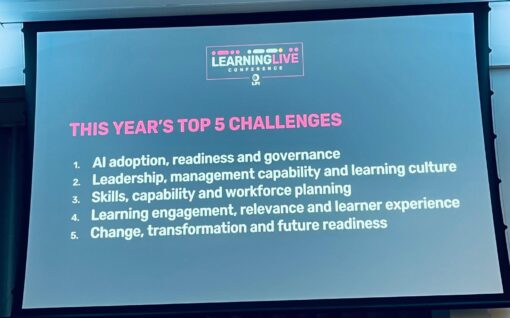
AI enthusiasm is giving way to pressure-testing and ROI scrutiny. While 100% of surveyed executives use AI, only 42% describe their organisation as aggressively using AI to innovate, down from 60% in 2025. Meanwhile, 73% say AI investment fell short of expectations and 16% report negative ROI.
The report argues organisations are moving away from innovation for innovation’s sake toward proving measurable business value before scaling investment.
Confidence in AI outputs remains low. Only 23% of executives say they have total confidence in AI accuracy, while 69% report spending more time monitoring and reviewing AI-generated work. In parallel, 90% fear employees are using unvetted shadow AI tools.
Trust and governance appear to be emerging as bigger operational issues than access or adoption. The report repeatedly stresses the growing human oversight burden attached to AI implementation.
There are also signs of mounting scepticism about the wider AI market. Globally, 31% of executives predict an AI bubble burst in 2026, although 69% still view AI as a long-term structural shift.
One of the more striking findings is around workforce perception, with 82% of executives admitting AI has lowered the value they place on human employees. At the same time, 88% worry employees are using AI to “perform productivity” rather than create genuine business value.
Despite this, organisations still see humans as central to high-stakes work. Most companies describe AI as supporting human-led work rather than replacing it entirely:
- 60% say humans lead the work while AI provides speed and data support
- 17% say AI drives core processes with humans overseeing exceptions
AI talent shortages are also reshaping hiring strategy with 52% of leaders saying shortages in AI talent and data literacy are major barriers to achieving their goals. As a result, 82% say they would hire in countries where they have no existing employees to secure top AI talent.
What to act on
The report suggests organisations should shift AI strategy away from broad experimentation and towards targeted, measurable use cases tied directly to operational outcomes. Leaders are increasingly under pressure to justify AI spend with visible ROI.
Human oversight also needs to become a formal part of AI operating models. Low confidence in AI accuracy, growing review burdens and concerns around unvetted tools all point to the need for clearer governance, validation processes and accountability frameworks.
At the same time, organisations should avoid treating AI as a substitute for human judgement. The research suggests the highest-value capabilities increasingly sit in areas AI struggles to replicate – ethics, strategic thinking, communication and nuanced decision-making.
Read the report https://www.globalization-partners.com/resources/report-ai-at-work-2026/