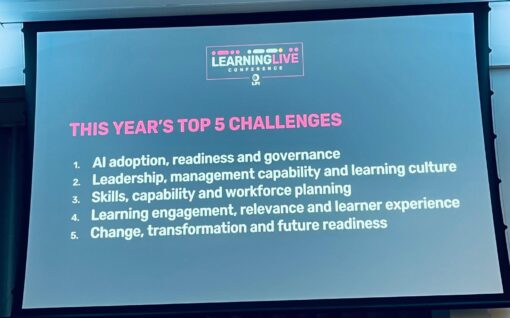
Research digested: What 81,000 people want from AI, Anthropic
About this research
Anthropic asked four questions to Claude.ai users:
- What’s the last thing you used an AI chatbot for?
- If you could wave a magic wand, what would AI do for you?
- Has AI ever taken a step towards that vision for you?
- Are there ways AI might be developed that would be contrary to your vision or what you value?
This research report is based on responses from 80,508 people across 159 countries. Responses were collected in December 2025. The answers were then analysed to highlight key themes.
Key findings
- 18.8% of respondents prioritise “professional excellence” from AI (ie improving effectiveness at work and focusing on higher-value work)
- But they also have aspirations for AI beyond work, including personal transformation (13.7%), life management (13.5%) and reclaiming time from work and chores (11.1%
- Unreliability/hallucinations (26.7%) is the top-ranked fear. The report says trustworthiness – not capability – is the primary barrier to wider reliance on AI. This is followed by job displacement (22.3%) and loss of human autonomy (21.9%).
- 67% of participants express net positive sentiment toward AI and 81% say they have taken at least one step toward their desired outcomes using AI, 18.9% say they are not getting expected results.
What to act on
With the reliability of AI as the top concern, organisations should prioritise accuracy, validation and governance.
At the same time, the dominant use case – professional excellence (18.8%) – suggests AI investments should focus on augmenting core workflows, not peripheral tools. That means embedding AI into high-value tasks, reducing routine cognitive load and enabling employees to shift toward strategic work. The payoff aligns directly with what users say they want most.
However, the data also shows that expectations for AI use extend well beyond productivity and into personal transformation (13.7%) and life management (13.5%). Organisations should recognise that AI is already being used in these ways. This raises both opportunity (deeper engagement) and risk (overreach into sensitive domains), which will require clear boundaries and safeguards.
The coexistence of optimism (67% positive sentiment) and concern – particularly around job displacement (22.3%) and autonomy (21.9%) – points to a workforce that is engaged but uneasy. Organisations should respond with explicit communication about how AI will be used, where human oversight remains, and how roles will evolve. Without that clarity, adoption may stall despite positive sentiment.
Finally, while 81% report progress using AI, nearly one in five (18.9%) do not. Organisations should invest in enablement to ensure benefits are distributed consistently rather than concentrated among advanced users.
Read the report https://www.anthropic.com/features/81k-interviews